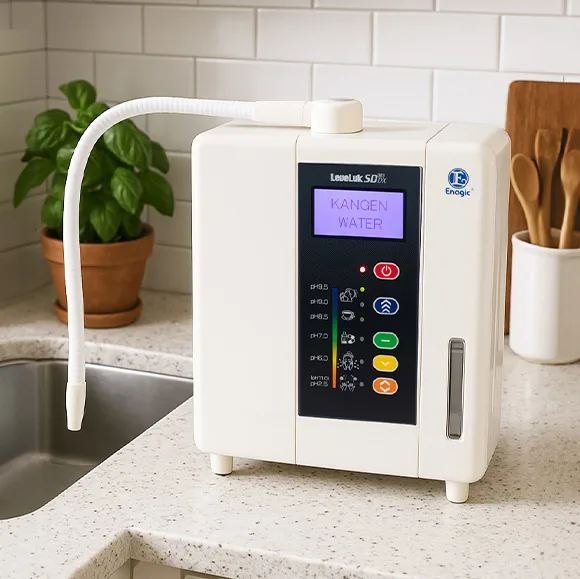
Walk into any conversation about Kangen Water® and you'll hear three words: alkaline, ionised and hydrogen-rich. They sound technical, but the ideas behind them are simple. Let's take them one at a time.
pH, in one minute
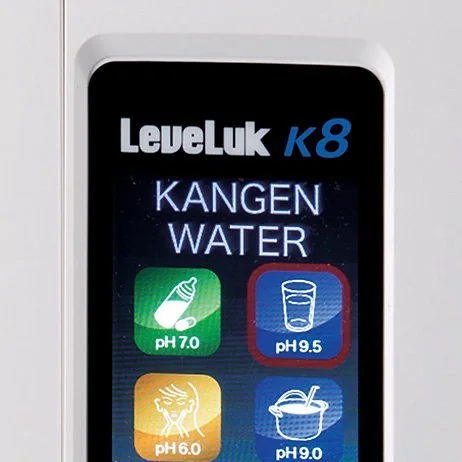
pH is just a scale from 0 to 14 that measures how acidic or alkaline a liquid is. Below 7 is acidic (lemon juice, vinegar), 7 is neutral (pure water), and above 7 is alkaline (baking-soda solution). Kangen drinking water sits gently on the alkaline side, usually between pH 8.5 and 9.5.
Raising the pH of water doesn't require any additives. It happens through a physical process called electrolysis.
What “ionised” really means
Inside the machine, filtered tap water flows across a stack of platinum-coated titanium plates carrying a small electrical charge. That charge nudges the water to separate into a slightly more alkaline stream and a slightly more acidic stream. The alkaline stream — the one you drink — is what we call ionised, or electrolysed, water.
Nothing is added to the water. Electrolysis simply rearranges what's already there and dissolves a little hydrogen gas in the process.
The hydrogen part
That last point is the interesting one. Electrolysis releases small amounts of molecular hydrogen (H₂) into the water. H₂ is the smallest molecule there is, and it's the subject of a large and growing body of scientific research — more than a thousand publications to date (we cover that in a separate article). Because hydrogen escapes over time, water made fresh at your tap holds more of it than water bottled weeks ago.
What it is — and isn't
Ionised water is, first and foremost, good-tasting drinking water made fresh on demand. It is not a medicine. There are no authorised health claims in the EU for alkaline or hydrogen water, and drinking it does not change your blood pH — your body regulates that far too tightly for a glass of water to matter. Anyone promising otherwise is overselling.
What it does offer is simple and honest: clean, filtered, fresh, pleasant water that many people find they drink more of. And drinking enough water is one of the few things the science is unanimous about.